In a dimly lit corner of a cybersecurity lab, a researcher points a standard directional antenna at a closed door. On the other side sits a monitor displaying a sensitive spreadsheet. There are no cameras, no hidden microphones, and no malware installed on the operating system. Yet, within seconds, a grainy but perfectly legible copy of that spreadsheet begins to materialize on the researcher’s laptop.
This isn't magic or a scene from a spy thriller; it is the reality of electromagnetic leakage. Every screen on your desk acts like a tiny, unintentional radio station, broadcasting its contents to anyone with the right equipment. For years, this was a niche concern for government agencies, but the arrival of cheap AI has brought these sophisticated eavesdropping techniques to the masses.
The Ghost in the Copper Wire
When your computer sends a signal to your monitor, it travels through an HDMI cable as a series of high-speed electrical pulses. These pulses create a localized electromagnetic field. If you have the right software and a basic receiver, you can capture these waves and reconstruct the image being displayed. It is the digital equivalent of hearing a conversation through a wall by pressing a glass against the surface.
Previously, reconstructing these images required expensive hardware and a PhD in signal processing. The results were often blurry, distorted, and difficult to read. However, researchers have begun training neural networks to recognize the specific patterns of these leaks. These AI models act like a digital pair of spectacles, sharpening the blur into clear text and high-resolution images.
The screen sitting on your desk is no longer a private canvas; it is a silent broadcaster leaking your data into the air.
This development has turned the humble computer monitor into a high-value target. Founders and developers often focus on firewalls and encrypted messaging apps, neglecting the physical reality of their hardware. If a person can stand in a hallway or a parking lot and see exactly what is on your screen, your 256-bit encryption doesn't matter much.
A Scrambler for the Physical World
Standard defense against this kind of spying usually involves lining a room with lead or copper mesh, effectively building a Faraday cage. This is impractical for a startup working out of a glass-walled co-working space or a marketer sitting in a coffee shop. The solution needs to happen at the source of the signal, not the walls of the room.
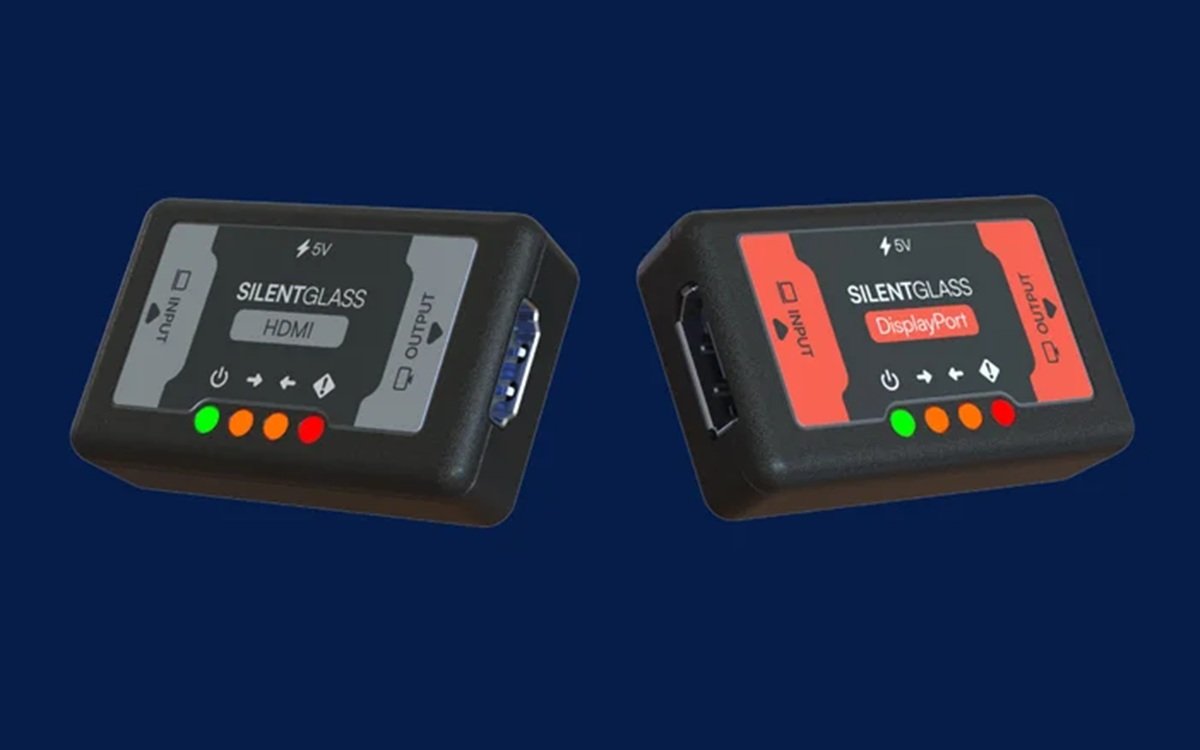
A new breed of HDMI protection devices is emerging to bridge this gap. These small gadgets sit between your computer and your monitor, acting as a sophisticated filter. Rather than just passing the data through, they inject a layer of controlled noise into the electromagnetic signature. It is a digital smoke screen designed to confuse the AI models trying to reconstruct the image.
The tech works by subtly altering the timing and frequency of the signals without affecting the visual quality for the human eye. To you, the movie or the lines of code look perfectly crisp. To an eavesdropper’s antenna, the signal looks like a chaotic mess of static that even the most advanced neural network cannot decipher. It turns the predictable patterns of an HDMI signal into an unreadable puzzle.
The New Border of Personal Security
This shift represents a change in how we think about privacy. We are moving away from a world where security is just about software patches and strong passwords. We are entering an era where the very physics of our devices can be used against us. The invisible waves emanating from our hardware are the new data leaks.
For the average user, this might feel like another layer of digital paranoia. But for those handling intellectual property, financial data, or sensitive code, the risk is tangible. As these interception tools become more accessible, the cost of being an easy target will only rise. The battle for data has moved off the server and into the very air around our desks.
We have spent decades worrying about who can see our data through the internet. Perhaps it is time we start worrying about who can see it through the walls. Does the hardware on your desk protect your secrets, or is it shouting them to the street?