




The Glass Fortress: Why the ANTS Breach Redefines National Digital Identity
The Asymmetry of Modern Siege Warfare
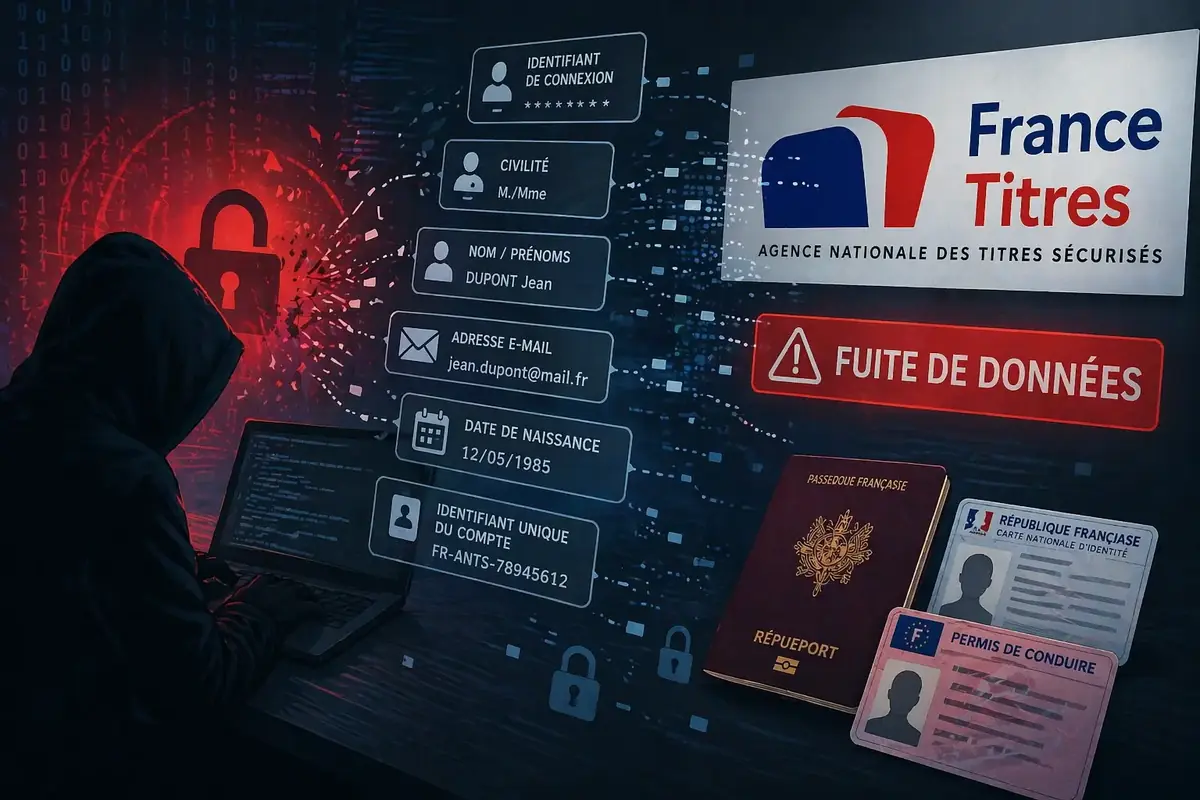
In the fourteenth century, the invention of gunpowder rendered the high stone walls of feudal castles obsolete almost overnight. Today, we are witnessing a similar erosion of traditional defenses, not through heavy artillery, but through the curiosity and technical agility of teenagers. The recent breach of the Agence Nationale des Titres Sécurisés (ANTS), which saw the exposure of twelve million user records, is a stark reminder that the size of a bureaucracy is often inversely proportional to its agility in a digital skirmish.
A fifteen-year-old suspect now sits at the center of this investigation, highlighting a profound demographic shift in technical capability. We have entered an era where the barrier to entry for disrupting national infrastructure has collapsed. It is no longer about the resources at one's disposal, but the persistence of a single mind working against a static target.
The centralization of identity is a honey pot that grows more attractive to predators exactly as it becomes more useful to citizens.
This event is not merely a failure of firewalls; it is a structural critique of how we aggregate citizen data. When a single gateway manages passports, driver’s licenses, and residency permits for an entire nation, it creates a single point of failure. The irony of modern governance is that in seeking to simplify the user experience for the public, we inadvertently simplify the reconnaissance process for those looking to exploit it.
From Monoliths to Modular Trust
Historically, authority was verified by physical proximity or a hand-delivered wax seal. The digitisation of these processes has kept the "seal" but removed the proximity, leaving us with a fragile middle ground. The ANTS incident demonstrates that the current model of the 'Digital State' is built on an architectural philosophy that assumes a perimeter can be perfectly defended.
We are seeing the limits of the vault-and-key metaphor in cybersecurity. When twelve million records—nearly a fifth of the French population—are compromised, the damage is not just in the leaked emails or names. The real casualty is the trust required for future friction-less governance. If citizens cannot trust the vault, they will eventually stop using the bank.
Forward-thinking developers and digital architects are now looking toward zero-knowledge proofs and decentralized identity protocols. These technologies allow a user to prove they have a valid driver’s license without the central authority ever needing to hold an unencrypted, searchable database of every driver in the country. We are moving from a world where we store data to one where we verify claims.
The Proliferation of the Amateur Specialist
The profile of the young suspect involved in the ANTS breach reveals a widening gap between institutional speed and individual ingenuity. Large organizations operate on procurement cycles, budget approvals, and committee-led security audits. A teenager with a high-speed connection and a niche forum operates on a cycle of pure iteration.
This is the rise of the 'amateur specialist,' individuals who possess deep, narrow knowledge of specific vulnerabilities before the vendors themselves have even acknowledged the risk. The threat is no longer institutional espionage, but decentralized curiosity. Marketing professionals and startup founders should take note: your security posture is only as strong as its ability to withstand the boredom of a brilliant fifteen-year-old.
- Centralization creates systemic risk that outweighs administrative efficiency.
- Digital identity requires a move toward verification-only models.
- The demographic of technical risk is shifting toward younger, unaligned actors.
Within half a decade, the concept of a national database of personal details will seem as antiquated as a physical filing cabinet. We will live in a world where identity is a fluid, cryptographically signed asset held by the individual, leaving the great digital vaults of the 2020s to be remembered as the last, failed monuments of a centralized age.

Free PDF Editor — Edit, merge, compress & sign