




The Ghost in the Silicon Corridor
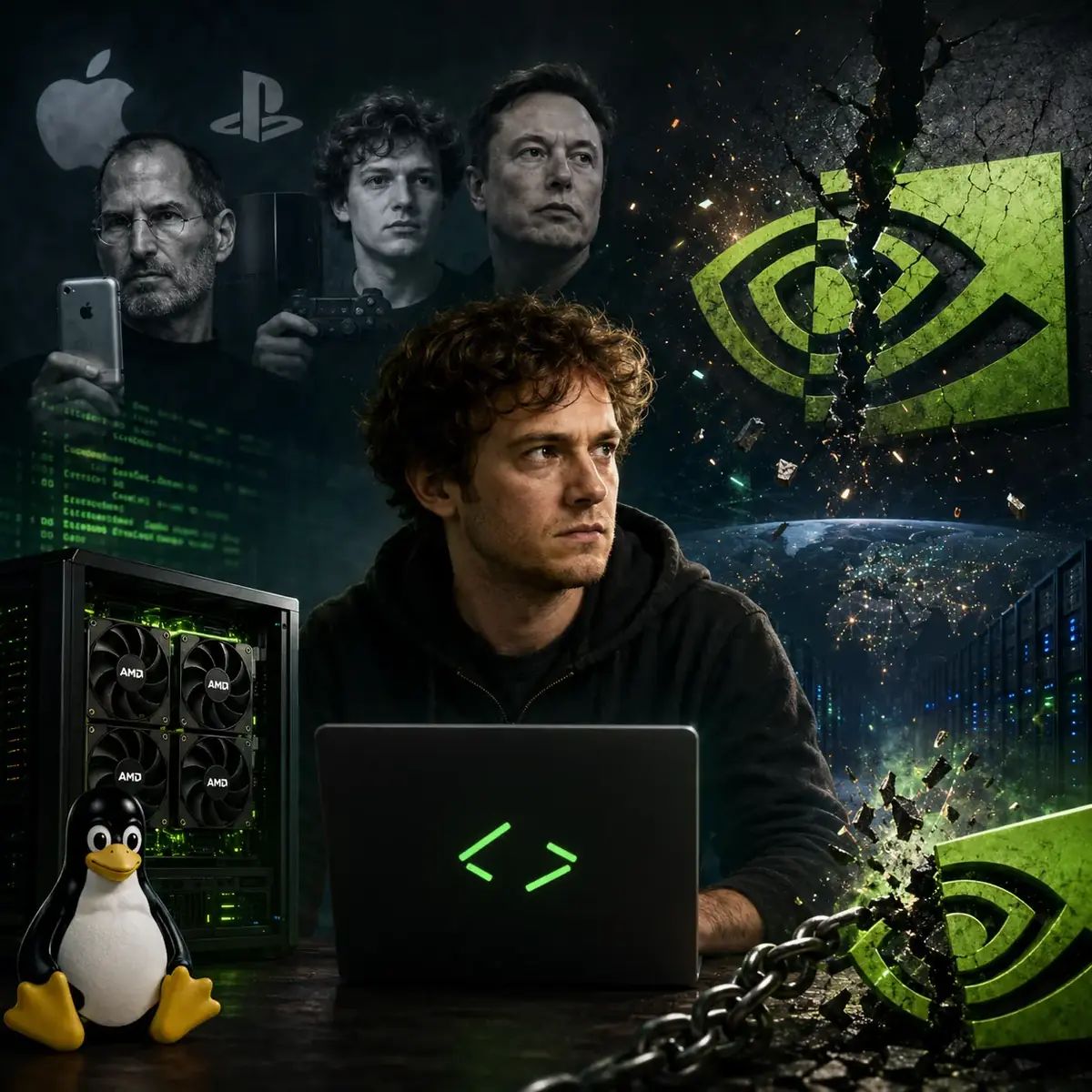
In a sun-drenched apartment far from the glass towers of Santa Clara, a man leans back from a monitor and cracks his knuckles. He isn't interested in the stock price of Nvidia or the frantic posturing of AI startups. Instead, he is looking for a crack in the code that controls the most coveted silicon on the planet.
The Loneliness of the Digital Architect
For more than a decade, George Hotz has operated as a kind of professional ghost within the machines of the powerful. He is the person who looked at the early iPhone and saw not a shiny consumer product, but a locked room that needed a key. Later, he did the same with the PlayStation 3, proving that even a global conglomerate could not fully own the hardware sitting in a teenager's bedroom.
Now, his focus has shifted to the massive clusters of processors that drive our modern obsession with artificial intelligence. While the rest of the industry treats these chips as sacred objects, Hotz treats them as puzzles. He views the software layers that govern these machines as unnecessarily complex, a series of hurdles designed to keep the average person from truly understanding how their tools function.
Why should a handful of corporations decide the speed of our collective progress? he seems to ask through his work. This is not merely about technical mastery; it is a philosophy of ownership that rejects the idea of a closed system. He moves through the digital world with a restless energy, always seeking the point of least resistance where a single line of code can bring a giant to its knees.
The Friction of Proprietary Dreams
The current struggle is centered on the software stack that makes modern chips useful. For years, the industry leader has maintained a tight grip on how developers interact with its hardware. This software acts as a gatekeeper, ensuring that if you want the best performance, you must stay within their garden. It is a highly profitable arrangement, but it is one built on friction and exclusivity.
Hotz is attempting to build an alternative—a leaner, more transparent way for machines to talk to each other. He believes that by stripping away the corporate bloat, he can make high-level computing accessible to anyone with a modest budget and a curious mind. It is a David and Goliath story where the slingshot is made of open-source libraries and late-night debugging sessions.
The most interesting things in technology happen when you stop asking for permission and start asking how things actually work.
This pursuit has caused no small amount of anxiety in boardrooms where market share is guarded like a state secret. When a single individual can replicate or bypass what thousands of engineers have built, it calls into question the very nature of corporate value. The vulnerability isn't just in the chips themselves, but in the assumption that no one would be bold enough to challenge the status quo.
A Return to the Hand-Built World
There is something deeply human about this defiance. We live in an era where our devices are increasingly opaque, sealed with proprietary screws and guarded by legal teams. To see someone take a screwdriver to the digital equivalent of these locks is a reminder that technology is, at its heart, a human craft. It is something we build, which means it is something we can change.
The tension between the individual and the institution is as old as the industrial age. In the silicon corridor, this tension manifests as a battle over who gets to define the limits of a machine's intelligence. While one side builds walls to protect its investment, the other side looks for the loose brick that will cause the whole structure to breathe.
As the sun sets over his desk, Hotz isn't thinking about the billions of dollars at stake. He is likely thinking about the next line of code, the next elegant solution to a problem that others have deemed insurmountable. In his world, the glory isn't in the profit margin, but in the moment the machine finally does exactly what it is told, without a corporate middleman standing in the way.

OCR — Text from Image — Smart AI extraction