




The Ghost in the Router: Why the Treasury Department Just Blacklisted a VPN Provider
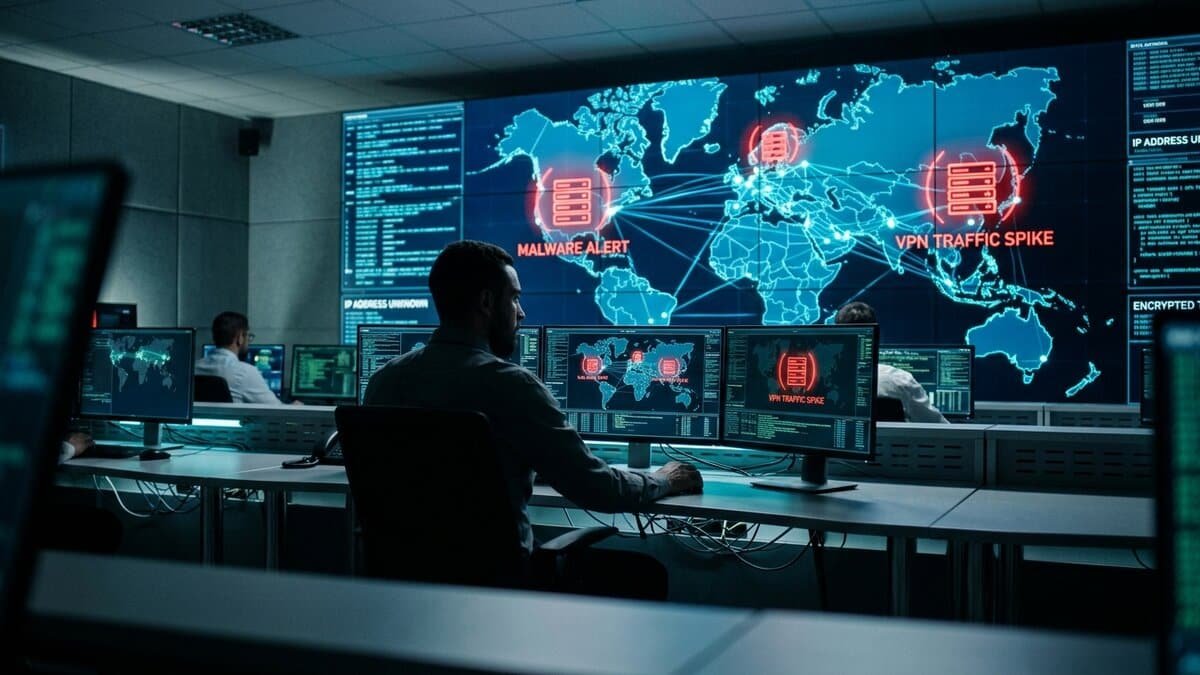
On a rainy Tuesday in Gothenburg, a developer named Emil adjusted his monitor and watched a series of server nodes in Southeast Asia blink into darkness. For years, he had advised colleagues to use virtual private networks to shield their activity from the prying eyes of advertisers and local governments. But on this afternoon, he realized that the technology designed to hide us from the state had become the state's primary target.
The United States Department of the Treasury, through its Office of Foreign Assets Control, recently took the unprecedented step of blacklisting a virtual private network service. It was not a decision born of bureaucratic whim. Rather, it represented a fundamental shift in how governments view the infrastructure of the invisible web, marking the first time a privacy utility has been classified as an instrument of state-sponsored crime.
The Architecture of Anonymity
For a generation of internet users, the virtual private network was a symbol of digital autonomy. It was a simple promise wrapped in complex encryption: click a button, and your physical location dissolves into a pool of shared addresses. But that same digital fog has increasingly been adopted by digital extortionists who hold corporate and municipal data hostage for ransom.
By routing malicious traffic through specialized servers, these extortion syndicates managed to evade traditional law enforcement tracking. The government's recent action suggests that the tools of digital privacy are no longer viewed as neutral. Instead, Washington is signaling that maintaining the infrastructure of total anonymity can be treated as a form of complicity.
"We used to think of these networks as public highways where anyone could drive. Now, the authorities are treating them as private toll roads built specifically for the getaway car."
This policy shift targets the economic nervous system of these operations. By placing the provider on the sanctions list, the government effectively cuts off its access to the global financial system. No legitimate hosting provider can rent them space, and no mainstream payment processor can handle their subscriptions without risking massive federal penalties.
The Fragile Boundary of Trust
The tension between security and secrecy has always been the defining struggle of the network age. In the early days of the web, privacy was seen as a standard feature of personal liberty, a quiet room in a noisy digital city. Today, that quiet room is increasingly viewed by intelligence agencies as a potential command center.
What worries privacy advocates is the potential for collateral damage. When a network is dismantled, it is not just the bad actors who lose their connection. Activists, journalists, and ordinary citizens living under restrictive regimes often rely on the precise same channels to reach the outside world. The blunt instrument of state sanctions rarely makes these distinctions.
As the digital and physical worlds continue to fuse, the definition of a border is changing. A server rack in a neutral country is no longer a safe haven if its IP addresses can be rendered useless by a scribble on a ledger in Washington. We are entering an era where our digital tools are judged not by how they protect the innocent, but by how easily they can be exploited by the guilty.
Back in Gothenburg, Emil closed his terminal window and looked out at the wet streets below. The rain was steady, washing away the footprints of the evening commuters, leaving the pavement dark, reflective, and momentarily clean.
Faceless Video Creator — Viral shorts without showing your face