




The End of the Secret: Why Your Body is Replacing the PIN Code
The Anatomy of Permanent Identity
In the mid-19th century, the British Empire struggled with a peculiar administrative problem in colonial India: how to verify that pension payments were going to the right individuals when names and faces often looked similar to foreign clerks. Sir William Herschel solved this by requiring palm prints on contracts. This was not a matter of surveillance, but of tethering a legal person to their physical existence. It was the birth of modern forensics, and today, we are seeing its final evolution in the hands of the French banking sector.
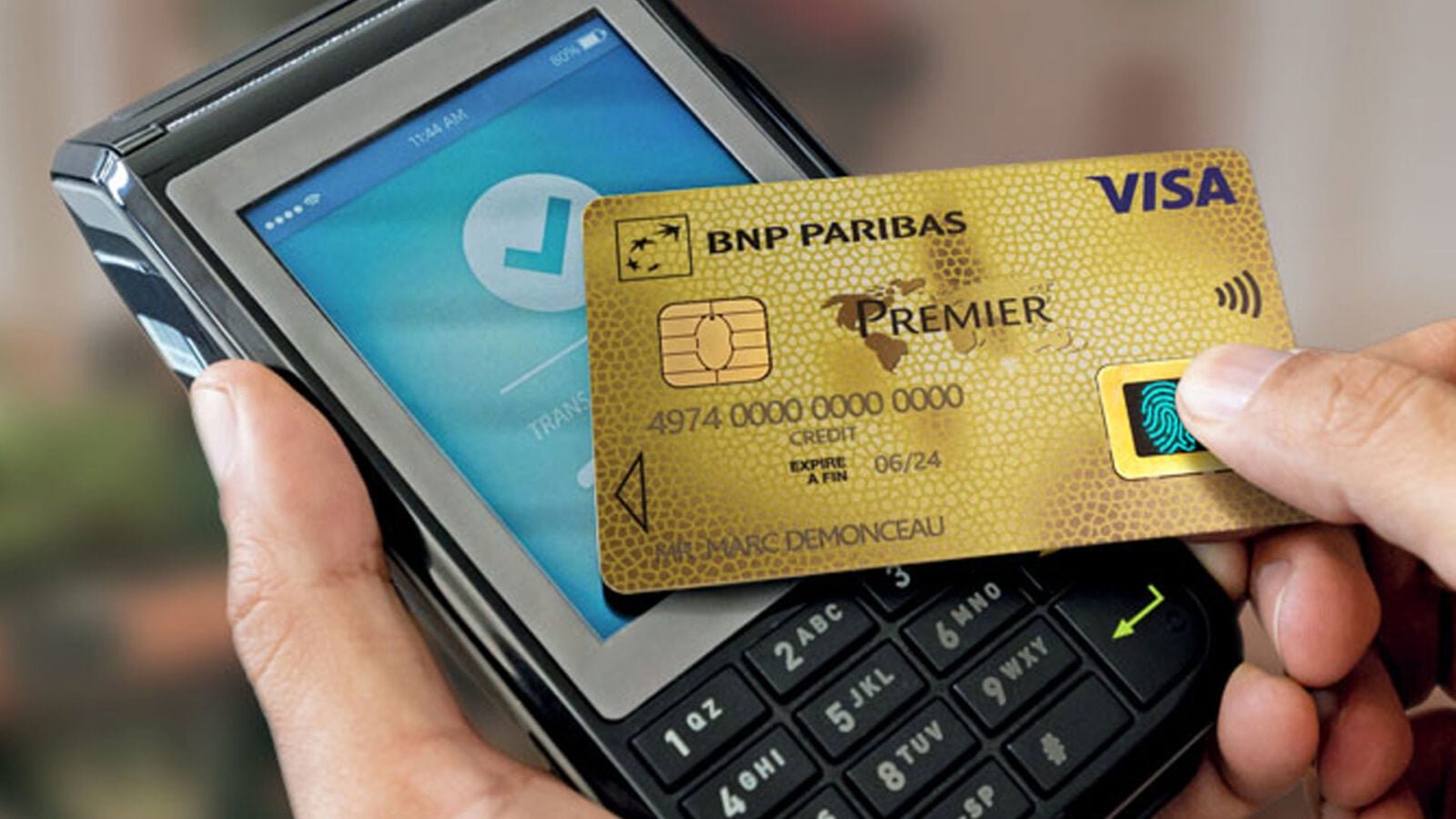
Major institutions like BNP Paribas, Crédit Agricole, and Société Générale are currently rolling out biometric payment cards that replace the traditional four-digit PIN with a capacitive thumbprint sensor. This is more than a convenience upgrade; it is the decoupling of financial access from the human memory. For decades, the PIN has been the weak point of retail banking—a numeric proxy for identity that could be observed, stolen, or forgotten. By moving the verification layer onto the card's silicon, we are entering an era where the transaction is verified by the individual's presence rather than their knowledge.
The digital economy is moving from what you know to what you are, effectively turning the human body into the ultimate cryptographic key.
The technical achievement here is not just the sensor itself, but the energy management. These cards do not contain a battery. Instead, they harvest energy from the magnetic field of the payment terminal via induction to power the biometric scan. It is a closed-loop system of identity. Unlike mobile payments where your fingerprint unlocks a phone that then talks to a bank, the biometric card performs the verification locally within its own secure element. This ensures that sensitive biological data never leaves the piece of plastic in your pocket.
The Death of the Transaction Ceiling
Historically, contactless payments have been gated by artificial friction. In France, the 50-euro limit for tap-to-pay exists because the bank assumes that any transaction above that amount requires a secondary layer of trust. If a card is stolen, the damage is capped by this threshold. Biometrics remove this economic ceiling entirely. Because the card only activates when the rightful owner is touching it, the need for a 50-euro stopgap vanishes. This allows for seamless high-value transactions that previously required the clunky insertion of a card and the manual entry of a code.
This shift reflects a broader trend in friction reduction. In the same way that containerization lowered the cost of global shipping to near zero, biometrics are lowering the cognitive cost of spending. When the physical act of payment becomes invisible, the velocity of capital increases. We are moving toward a world of ambient commerce where the checkout process is no longer a discrete event but a natural extension of physical movement.
Financial institutions see this as a strategic moat against the encroachment of tech giants. By upgrading the physical card—a piece of hardware they already own and distribute—banks are reclaiming the relationship with the user at the point of sale. It is an attempt to make the plastic card relevant in an age of digital wallets. While Apple and Google have long used biometrics, the bank card remains the most universal financial tool. Giving it the same security features as a smartphone levels the playing field for traditional lenders.
Within five years, the idea of typing numbers into a plastic pad will feel as archaic as signing a paper check or counting out gold coins for a loaf of bread. We are witnessing the final stage of the invisible economy, where your physical presence is the only permission the market requires to facilitate a transfer of value.
AI Film Maker — Script, voice & music by AI