




The Doullens Preservation Files: When the State Rebranded Prison as Pedagogy
The Semantic Gap of State Correction
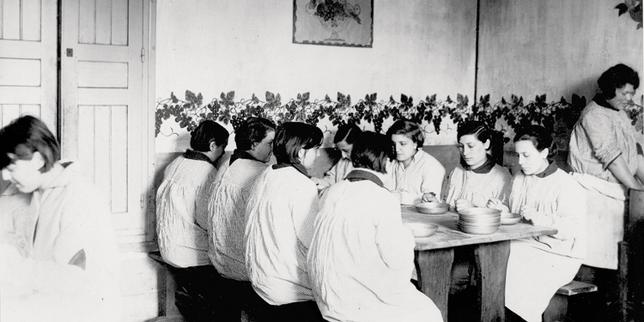
The institutional archives of early 20th-century France did not use the word prisoner for young girls like Cécile. Instead, the administration preferred the term pupil. While the official documents spoke of preservation and moral guidance, the physical infrastructure at Doullens told a story of bars, high walls, and absolute labor. It was a system built on the premise that poverty and teenage rebellion were not social symptoms, but character flaws that required a carceral cure.
Michel Bey, Cécile’s son, spent his retirement peeling back the layers of a history his mother never spoke of. What he found was not a school, but a mechanism for erasing identity. The state claimed these centers were a progressive alternative to adult prisons, yet the daily reality mirrored the very penal systems they were meant to replace. It was a rebranding exercise that allowed the government to hold minors indefinitely under the guise of protection.
The preservation schools were designed to reform the soul through discipline, isolating the 'bad girls' from the corruptive influences of their urban environments to instill a sense of order and religious duty.
This official mission statement ignores the economic engine driving the institution. The girls were not just being reformed; they were being utilized. By framing their detention as a moral necessity, the state secured a captive workforce for laundry and needlework. The discipline mentioned in the archives was often a euphemism for sensory deprivation and the total suppression of the individual will.
The Profitability of Moral Panic
Correction was a lucrative business for the penitentiary administration. By categorizing 'doubtful morals' or petty theft as a state emergency, the government justified the expansion of these preservation schools. The criteria for detention were intentionally vague, allowing the police to sweep up any young woman who defied the rigid social expectations of the era. This wasn't about public safety; it was about enforcing a specific brand of social hygiene.
The records at Doullens reveal a obsession with surveillance. Every letter was censored, and every interaction was monitored to ensure that no 'contagion' of ideas could spread between the inmates. For Cécile, being a 'bad girl' was a label applied by a society that had no place for independent women. The institution functioned as a social filter, catching those who fell through the cracks of the family unit and placing them in a vertical hierarchy where the state acted as a punitive father figure.
Tracing Cécile's steps requires looking past the sanitized ledgers to the geographic isolation of the Somme region. These schools were placed far from public view, ensuring that the screams of the 'pupils' remained an internal administrative matter. When we look at the budget allocations for these facilities, we see a stark lack of investment in actual education, with the majority of funds diverted toward security and the maintenance of the physical perimeter.
The Long Shadow of Institutional Secrecy
The closure of these centers in the mid-20th century did not come because of a sudden moral awakening, but because the cost of maintaining such large-scale domestic prisons became politically inconvenient. The transition from the preservation model to modern social services was messy and left behind a generation of women who were conditioned to believe their very existence was a crime. Michel Bey’s journey is a rare instance of an individual forcing the state to acknowledge a history it tried to bury under layers of bureaucratic jargon.
Even after the physical walls at Doullens were repurposed, the psychological walls remained for the survivors. The state never offered a formal apology or an audit of the trauma inflicted under the name of 'preservation.' Instead, it relied on the silence of the victims, betting that the shame associated with being a ward of the state would keep the truth out of the history books. This silence is the final layer of the carceral system, extending the punishment long after the sentence has ended.
The ultimate success of documenting this era depends on whether we view Doullens as a historical anomaly or as a blueprint for how modern institutions still attempt to hide punitive measures behind the language of care and rehabilitation.

AI Image Generator — GPT Image, Grok, Flux