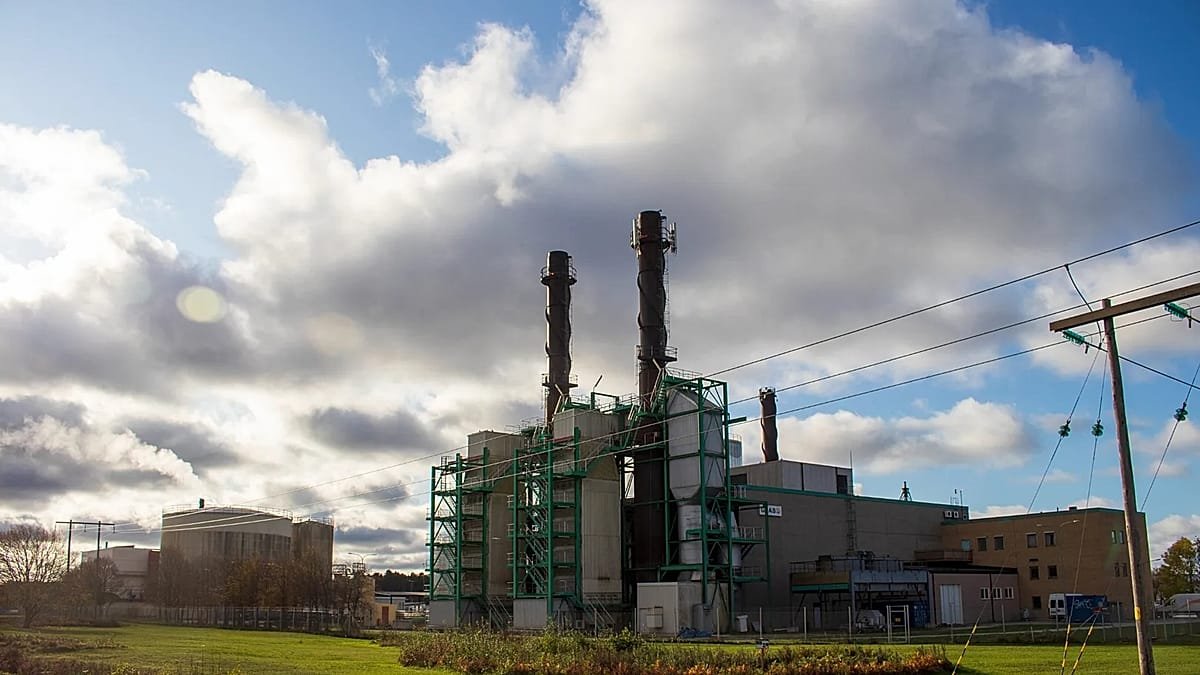
The Thermodynamic Front Line
In mid-2025, Swedish security forces quietly neutralized a threat that provides a stark blueprint for the next decade of geopolitical friction. While traditional warfare relied on the physical movement of hardware across borders, the attempt to disable a Swedish thermal plant by pro-Russian actors highlights a pivot toward what we might call thermodynamic sabotage. The goal was not to steal data or encrypt files for ransom, but to physically manipulate the temperature of a city.
This incident mirrors the shift in early 20th-century naval tactics when the invention of the torpedo made the largest battleships vulnerable to invisible, underwater threats. Today, our utilities are the new dreadnoughts—massive, essential, and increasingly exposed through the digital umbilical cords required to run them efficiently. Minister of Civil Defense Carl-Oskar Bohlin’s revelation marks a period where the boundary between a software glitch and an act of war has effectively evaporated.
The geography of conflict has shifted from the map in the war room to the thermostat in the living room.
By targeting heating infrastructure, attackers seek to break the social contract between a state and its citizens. In the Nordic climate, heat is not a luxury; it is a fundamental survival requirement. Disruption at this level aim to trigger a psychological cascade, eroding public trust in the state's ability to provide basic safety. The code is merely the delivery mechanism for a much older weapon: the cold.
From Information to Physicality
For twenty years, the tech industry focused on the protection of bits—credit card numbers, intellectual property, and private communications. We are now entering the era of the protection of atoms. The Swedish thermal plant incident suggests that the era of the 'nuisance' hack is over, replaced by a sophisticated intent to cause systemic mechanical failure. This requires a deep understanding of Industrial Control Systems (ICS) and the specific physics of heat distribution.
We are seeing the birth of 'frictionless siege' tactics. Historically, a siege required surrounding a city and cutting off supplies over months. Now, a localized script can achieve a similar effect in milliseconds by closing a valve or overpressurizing a boiler from three time zones away. Security is no longer a department in these organizations; it is the core engineering constraint.
This event forces a rethink of how we build and connect our physical world. The convenience of remote monitoring and automated balancing in energy grids has created a massive, invisible attack surface. Developers and founders building in the climate-tech and infrastructure space must now treat every sensor as a potential entry point for a nation-state actor. The technical challenge is no longer just about uptime, but about creating 'graceful degradation'—the ability for a system to revert to manual, analog control when the digital layer is compromised.
The Stockholm incident serves as a warning for every nation currently digitizing its power grid. As we move toward more decentralized energy systems to combat climate change, we are inadvertently increasing the number of nodes that can be targeted. The security protocols of 2025 cannot simply be patches on old software; they must be baked into the hardware of the valves and turbines themselves. By 2030, a city's resilience will be measured by how well its architecture can survive a total digital blackout without losing its physical warmth.