




The Coastal Architect of Memory and Scars
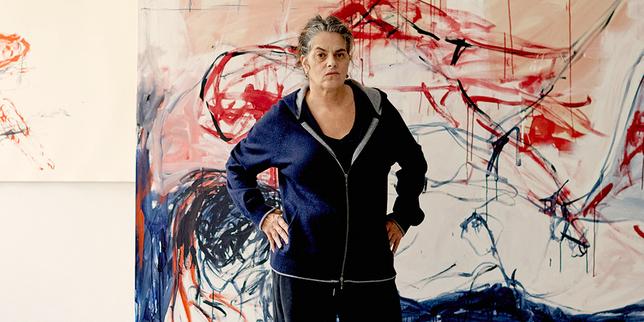
On a Tuesday afternoon in Margate, the light off the North Sea has a way of bleaching the color out of the pavement, making everything look like an overexposed photograph. Tracey Emin stands amidst this starkness, not as the enfant terrible who once shocked the British public with her unmade bed, but as a woman reconstructing a world. She often speaks of her return to this seaside town as a homecoming that is less about nostalgia and more about survival, a physical grounding after years of illness and public scrutiny.
She moves through the streets of her childhood with a quiet gravity now. The sharp edges of her earlier career, defined by the raw exposure of her private griefs and carnal realities, have softened into a desire for permanence. In Margate, she is no longer just the subject of the art; she is the architect of its future, buying up properties to convert them into studios and schools where the act of creation is treated with the sanctity of a religious rite.
The Geometry of a Salvaged Life
There is a specific kind of beauty in a life that has been broken and put back together with visible seams. Emin’s work has always functioned as a map of her own traumas, a ledger of the bruises left by men, by the art market, and by her own body. The recent retrospective at the Tate Modern serves as a reminder that her career was never about aesthetics alone, but about the terrifying labor of staying alive in the face of collapse.
Her return to the coast marks a shift from the internal to the civic. By establishing a microcosm of galleries and educational spaces, she is attempting to shield younger artists from the very precarity that nearly consumed her. It is a form of protection, she seems to suggest, a way to ensure that the spark of a new idea isn't extinguished by the cold winds of the industry.
“Every piece of art I produce is a receipt for a moment I endured, a physical proof that I am still standing here despite everything that tried to pull me under.”
This commitment to the next generation isn't born of a sense of duty, but from a profound understanding of what it means to be an outsider. She remembers the young girl who walked these same beaches, feeling the weight of a town that didn't always know what to do with its most vibrant spirits. Now, she is the one providing the walls, the light, and the permission to fail.
The Quiet Permanence of the Tide
To watch Emin work today is to see a woman who has made peace with the messiness of being human. Her studios are not sterile environments but spaces where the grit of the real world is invited inside. She believes that art cannot be separated from the blood and bone of the person making it, and her Margate project is a testament to that visceral connection between place and personhood.
The developers and investors who often circle such projects are notably absent from her calculations. She is building a legacy that cannot be traded on an exchange, something that feels more like a forest than a factory. It is an ecosystem where the older trees provide shade for the saplings, a rare model of mentorship in a world that often prefers competition to community.
As the sun begins to dip below the horizon, casting long, bruised shadows across the sand, she looks out toward the water. The tide comes in and goes out, indifferent to the dramas of the shore. She stands there, a figure of resilience, watching the waves and thinking of the names of the students who will soon fill her rooms, wondering what ghosts they will turn into gold.
Social Media Planner — LinkedIn, X, Instagram, TikTok, YouTube