




The Archival Echo: How Audio Creators are Decoding Family Trauma and History
The Chemistry of Recorded Memory
In the late 1920s, the introduction of electrical recording transformed how humanity preserved its own voice. For the first time, the subtle tremors of human emotion could be captured on wax and shellac, moving beyond the sterile translations of print. Today, we are witnessing a similar transition in how we handle historical trauma. We are moving away from dry textbook chronologies toward deeply personal, acoustic monuments.
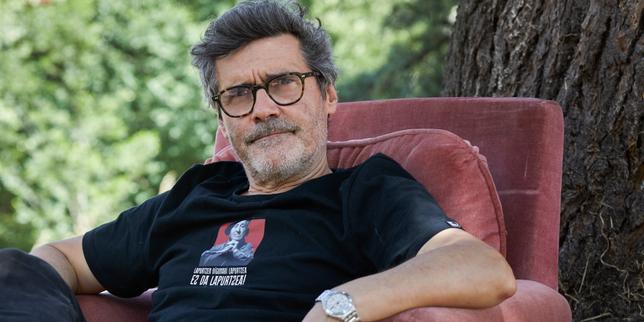
Antoine Chao, a seasoned radio documentarian and musician, recently demonstrated this shift with his project built around the bombardment of Guernica. By blending the historical terror of the 1937 Basque massacre with the intimate, lived experiences of his anti-Francoist refugee parents, Chao has built a new kind of memorial. It is an acoustic bridge that connects global tragedy to the kitchen table.
The true weight of history is not found in the grand declarations of generals, but in the quiet, trembling cadence of a survivor's voice captured before it fades.
This approach highlights a growing trend among digital creators: the use of highly localized, specialized audio archives to bypass the homogenized narratives of mainstream media. By treating sound as a physical artifact, creators can evoke empathy in ways that flat pixels cannot duplicate.
From Archives to Living Audio
For decades, historical archives were treated like mausoleums. They were quiet places where documents went to be preserved, but rarely heard. The democratization of high-fidelity recording tools and digital distribution has changed this dynamic. Audio is no longer just a medium for consumption; it has become a canvas for historical reclamation.
Chao's work uses archival soundscapes to make the political deeply personal. By juxtaposing family memories with historical recordings of fascist violence, the narrative transcends mere journalism. It becomes an immersive acoustic environment where the past actively speaks to the present. This technique teaches us that audiences do not just want to learn about history; they want to feel its texture.
This methodology offers a clear blueprint for modern digital publishers and podcasters. The projects that resonate most deeply are those that find the intersection between macro-historical events and micro-personal diaries. It is the friction between these two scales that generates genuine narrative heat.
The Multi-Generational Transmission of Narrative
We are currently living through a critical transition period. The generation that witnessed the mid-twentieth century's darkest moments is rapidly disappearing. This loss creates a preservation crisis, but also an opportunity for creative regeneration. Audio heritage preservation is shifting from institutional libraries to independent digital creators who can react quickly and experiment with form.Chao, brother of musician Manu Chao, carries a family legacy of resistance that could have easily been forgotten in the noise of the internet. By translating this legacy into a hybrid performance of music, speech, and archival noise, he ensures the survival of the message. This is not passive nostalgia; it is an active, deliberate transmission of values across generations.
Five years from now, as synthetic media and simulated voices proliferate, the demand for verified, deeply human acoustic archives will skyrocket. We will look back at these pioneering audio experiments as the foundational blocks of a new, decentralized oral history network that keeps the fragile truth of human struggle alive in a digital world.

AI Video Creator — Veo 3, Sora, Kling, Runway