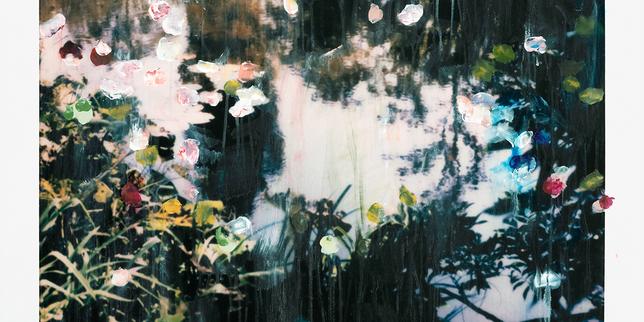
The Chemistry of Persistence
In the mid-19th century, as the first steam locomotives began to shrink the physical world, a parallel shrinkage occurred in the way we perceived light. Painters who once spent months capturing the texture of a velvet drape found themselves competing with the chemical immediacy of the daguerreotype. Yet, rather than disappearing, painting evolved into Impressionism—a move away from accuracy and toward the truth of a moment. Today, as generative artificial intelligence threatens to make every image mathematically perfect and contextually vacant, François Halard’s work at the Gallifet art center serves as a vital reminder that the value of an image lies in its physical friction with time.
Halard, a figure whose lens has defined the aesthetics of shelter and fashion for decades, has spent thirty-three years curated by his own impulses. His exhibition, Ne rien jeter, 33 ans après, is not a professional archive; it is a metabolic byproduct of a life lived through a viewfinder. By refusing to discard the artifacts of his journey, Halard has created a corpus that functions less like a gallery and more like a biological hard drive. These 'image boxes' represent a specific kind of resistance against the ephemeral nature of the digital stream.
The modern image is a ghost; Halard’s work is a fossil, retaining the weight and mineral density of the moment it died.
We are currently witnessing a massive cultural revaluation of the tangible. In an economy where software can instantly simulate any style, the only remaining scarcity is an authentic history. Halard’s insistence on the ambiguity between photography and painting is not merely a stylistic choice. It is a blurring of the lines between the objective recording of a room and the subjective memory of how that room felt. This is the transition from photography as data to photography as a tactile asset.
The Architecture of the Unfinished
If you look at the way modern neural networks render an interior, they prioritize clarity, symmetry, and the absence of noise. They provide exactly what you ask for, but they cannot provide the 'dust'—the unintended details that anchor a photograph in a specific Thursday in 1991. Halard’s collection is a masterclass in the importance of the unintended. By archiving his encounters with people and places without the immediate pressure of commercial publication, he has preserved the raw edges of his creative process.
There is a specific economic theory known as the Lindy Effect, which suggests that the longer something has survived, the longer it is likely to persist in the future. Digital files are fragile; they suffer from bit rot, format obsolescence, and the sheer volume of their own noise. Halard’s physical prints, stored and cataloged over three decades, gain value through their survival. They represent a hedge against the volatility of the current attention economy, where images are consumed and discarded in milliseconds.
This archival approach mirrors the way successful software developers treat 'legacy code'—not as something to be deleted, but as a foundation that contains the logic of the entire system. Halard’s boxes are the source code of his visual language. By revisiting them decades later, he reveals the recurring patterns of his own curiosity, showing us that true style is a slow accumulation rather than a sudden pivot.
Beyond the Screen: The Return to the Object
As we move deeper into a post-scarcity world for visual content, the role of the creator shifts from being a producer of images to being a curator of experiences. The developer of the next decade will not be the one who can generate a thousand variations of a logo, but the one who can select the single version that resonates with human history. Halard’s work highlights this shift. His value is not in his ability to take a photo, but in his ability to keep the right ones and understand their context thirty years later.
The move toward the 'painterly' photograph is a move toward human error. When an image begins to look like a painting, it loses the cold authority of the machine. It invites the viewer to fill in the gaps with their own imagination. This ambiguity is exactly what creates a lasting connection between the viewer and the work. In a world of infinite signals, the most powerful thing an artist can offer is a bit of silence and a lot of texture.
By the end of this decade, the most luxury 'product' in the digital space will be proof of physical presence. Halard’s boxes are more than just a retrospective; they are a blueprint for how we might navigate a future where the distinction between the real and the simulated has completely dissolved. We will look back at these physical archives not as relics of a dead medium, but as the anchors that kept our visual culture grounded in reality.
Five years from now, the most valuable assets in the digital economy will be the uncopyable traces of physical lives, stored in boxes we finally have the wisdom to open.