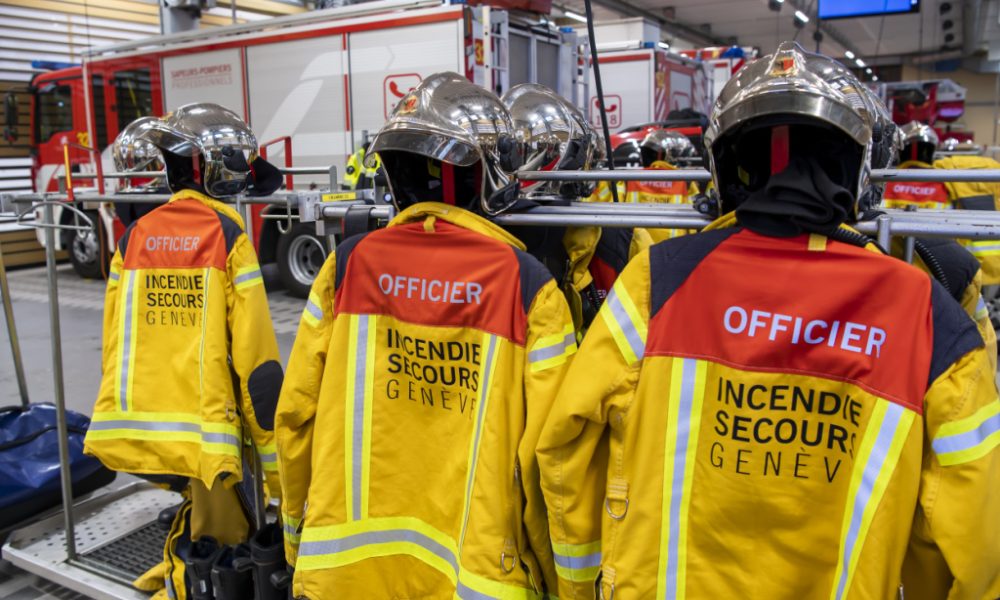
Thirty-four Swiss firefighters deployed from Geneva to Bordeaux on Saturday to support French crews battling severe wildfires. This deployment highlights the growing reliance on cross-border mutual aid networks as climate pressures strain national emergency services. The detachment, drawn from various services in French-speaking Switzerland, represents a coordinated response to escalating wildfire activity in southwestern France.
Strategic Resource Allocation
Deploying personnel across international borders requires rapid administrative and logistical alignment. The Swiss team traveled with specialized equipment designed for forest fire suppression, ensuring they can operate independently if needed. This mobilization relies on established bilateral agreements between Switzerland and France, which bypass typical bureaucratic delays during crises.
For municipal leaders, sending resources abroad is a calculated risk. Departments must maintain local defense capabilities while dispatching highly trained staff to high-risk zones. The Geneva-led mission balances these priorities by pooling personnel from multiple regional stations, minimizing the impact on any single municipality's daily operations.
Interoperability and Technical Hurdles
Integrating foreign firefighting units into an active incident command system presents distinct technical challenges. Differences in radio frequencies, command structures, and even hose couplings can slow down joint operations. To mitigate this, the Romand delegation includes liaison officers trained in French emergency protocols.
These coordinators bridge the communication gap between the Swiss teams and the local French command center in Bordeaux. Standardized training protocols established through regional drills over the past decade have simplified this integration. Key operational areas for joint teams include:
- Radio communication synchronization using shared tactical channels.
- Compatibility checks for water delivery systems and physical adapters.
- Shared mapping data and GPS tracking systems for ground crew safety.
- Unified logistics pipelines for fuel, food, and equipment maintenance.
Software systems also play an increasing role in modern mutual aid. Incident commanders use shared geospatial platforms to track personnel locations and fire fronts in real time. This technical alignment prevents friendly fire incidents and ensures efficient asset distribution across vast, smoke-filled territories.
The Economics of Shared Security
The financial framework of international deployments is complex but necessary for sustainability. Under typical bilateral treaties, the requesting nation covers operational costs, including fuel and consumables. The sending nation continues to pay base salaries, viewing the deployment as critical real-world training for its personnel.
This economic model allows smaller nations like Switzerland to maintain a highly experienced force without facing constant domestic crises. Swiss firefighters gain invaluable experience tackling large-scale blazes that rarely occur in their home cantons. This knowledge is then imported back to local departments, improving domestic readiness for future extreme weather events.
Furthermore, the shared cost structure prevents any single region from bearing the entire financial burden of climate-induced disasters. As wildfire seasons lengthen across Europe, mutual aid acts as a form of operational insurance. Collaborative defense lowers the overall capital expenditure required for specialized, seasonal equipment that sits idle most of the year.
European Mutual Aid Frameworks
While Switzerland is not an EU member, it frequently collaborates with the European Union Civil Protection Mechanism. This framework coordinates disaster response efforts across Europe and beyond, sharing satellite data and heavy aerial assets. The Bordeaux deployment operates parallel to this system, utilizing direct regional treaties to speed up response times.
These direct agreements often prove faster than centralized continental dispatch systems. Local commanders in neighboring regions can initiate contact and authorize deployments within hours. For fast-moving forest fires, this reduced latency is critical to containing outbreaks before they threaten major infrastructure.
Data analytics models suggest that early intervention by specialized ground crews can reduce total containment costs by up to forty percent. By arriving during the critical early phases of the fire's expansion, the Swiss reinforcement unit helps prevent localized incidents from merging into uncontrollable firestorms.
Additionally, these joint exercises help refine standard operating procedures for aerial water-bombing coordination. Ground crews must communicate seamlessly with helicopter pilots from different nations to ensure safety during drops. The presence of Swiss personnel on the ground in Bordeaux provides an opportunity to test these multi-national communication chains under intense pressure.
This deployment also serves as a test case for logistics software integration. Managing supply lines for food, medical supplies, and equipment maintenance across borders requires precise digital tracking. Future operations will likely rely on automated asset-sharing platforms to manage these resources dynamically.
Keep an eye on how European nations standardize emergency communications software to streamline future cross-border deployments.