




Justice Beyond the Headlines: The Families Seeking Answers in the UTA Flight 772 Civil Case
The Human Element in a Complex Legal Battle
Legal proceedings involving high-profile political figures and international relations often feel abstract, like a chess match played out in distant courtrooms. However, for Danièle Klein, the current appeal process regarding historical Libyan financing is not about political strategy. It is about the memory of 170 people who lost their lives on September 19, 1989.
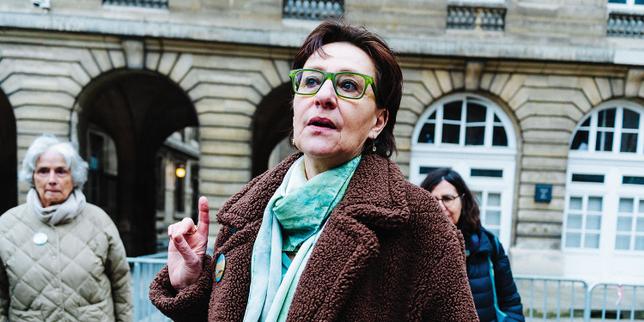
Klein is the sister of one of the victims of UTA Flight 772, a French airliner destroyed by a suitcase bomb over the Sahara Desert. The attack was orchestrated by the regime of Muammar Gaddafi, and decades later, its legacy continues to weave through the French judicial system. Klein has become the visible face and the vocal representative of the victims' families, ensuring that the human cost of these historical events remains at the center of the conversation.
Why the UTA Bombing Still Matters Today
To understand why this specific tragedy is resurfacing in contemporary courtrooms, it is necessary to look at the timeline of international justice and diplomacy. While the bombing occurred over thirty years ago, the legal ramifications have never truly settled because of how the case intersects with broader investigations into foreign influence and political funding. For the families, the goal is not just a verdict; it is a public acknowledgment of the truth.
- Accountability: Ensuring that state-sponsored actions carry long-term consequences.
- Visibility: Preventing the names of the victims from being buried under layers of political bureaucracy.
- Closure: Seeking a final judicial resolution that spans across multiple decades and administrations.
The Role of Civil Parties in French Law
In the French legal system, victims and their families can join a criminal case as civil parties. This allows them to participate in the proceedings, access the case files, and request specific investigative actions. Danièle Klein’s presence in the courtroom is a exercise of this right, turning a technical trial into a moment of public accountability.
She represents a collective of families who have spent years navigating the complexities of international law. Their involvement serves as a reminder that behind every investigation into government conduct, there are individuals whose lives were permanently altered by the decisions of those in power. Klein’s role is to bridge the gap between historical grievances and modern justice.
The Persistence of Memory
The sexagenarian advocate has spent a significant portion of her life dedicated to this cause. Her work involves constant communication with legal experts and other families who shared the same loss. By appearing in court and speaking to the media, she prevents the case from becoming a mere footnote in a larger political narrative.
The current appeal process is particularly significant because it examines the connections between the former Libyan regime and French political circles. For Klein and the families she represents, these connections are not just theories; they are part of a larger web of influence that they believe contributed to the environment in which the 1989 attack occurred.
The Weight of the Testimony
When Klein speaks in the courtroom, the atmosphere shifts. The focus moves from financial ledgers and political appointments to the reality of the 1989 disaster. This transition is vital for the judicial process because it provides a moral compass for the legal arguments being presented by both sides.
Her advocacy demonstrates that the legal system is not just a machine for processing data, but a tool for addressing human suffering. Even as the technical details of the case become increasingly dense, the presence of the civil parties ensures that the fundamental questions of right and wrong remain leading the way of the judges' minds.
- The Families: A group of 170 diverse backgrounds united by a single tragic event.
- The Goal: Clear judicial links between perpetrators and those who enabled them.
- The Method: Persistent participation in every level of the appellate process.
Now you know that behind the complex headlines of international litigation, there are individuals like Danièle Klein who serve as the conscience of the court. Their goal is to ensure that as society moves forward, it does not leave the search for truth behind.

OCR — Text from Image — Smart AI extraction