




Inside the FBI’s Secret Cyber Ghost Town Built Under a Hangar Roof
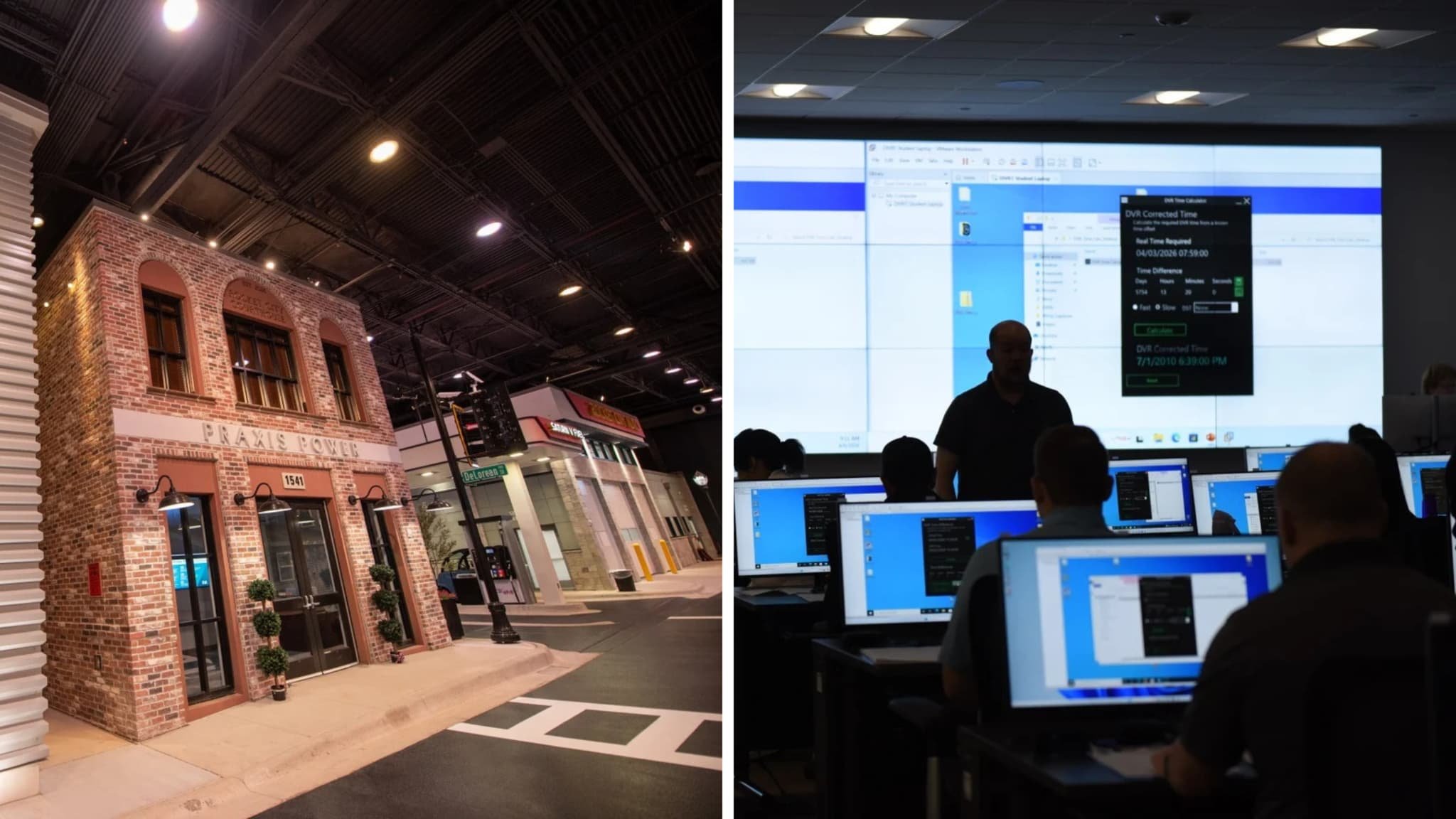
A yellow traffic light blinks in the absolute silence of a windowless warehouse. There are no cars on the asphalt, no pedestrians on the sidewalks, and no sky above, only a grid of cold steel rafters and humming air conditioning units. Yet, the air feels tense, heavy with the digital equivalent of an approaching thunderstorm.
This is a custom-built, simulated municipality tucked deep within a secured federal facility. Completed in 2025, the miniature metropolis serves as the ultimate playground for the FBI’s elite cyber defense teams. Here, the federal government has constructed a physical shadow of modern civilization, designed specifically to be broken, hacked, and salvaged in a loop of controlled catastrophe.
For years, cyber training happened on flat screens and virtual machines. Agents stared at terminal windows, watching text scroll by as they simulated attacks on abstract servers. But the division between the digital world and the physical environment has evaporated. When a municipal water system or a regional electrical grid is targeted, the consequences are measured in concrete, steel, and flowing water, not just bytes.
The Machinery of a Synthetic Crisis
Inside the hangar, the FBI has assembled actual industrial control systems—the gray metal boxes and heavy-duty switches that run real-world utility stations. These are not props. They are the exact programmable logic controllers that open water valves, regulate pipeline pressure, and switch on high-voltage electrical transformers across the country.
To make the training as authentic as possible, every pipe, wire, and router in this synthetic town functions exactly as it would in a mid-sized municipality. If an agent fails to patch a vulnerability in the simulated water treatment facility, pressure builds up in real, physical pipes until safety valves blow. The psychological impact of hearing metal strain under pressure changes how a developer or an agent reacts to an alert.
We realized that you cannot teach someone to defend a power grid by showing them a PowerPoint presentation of a turbine.
This isolation is absolute. The entire miniature city operates on a completely closed loop, entirely detached from the actual internet. This air-gapped setup ensures that even the most aggressive, self-replicating malware deployed during these war games can never escape into the wild. It is a digital laboratory where dangerous lines of code are allowed to run free, safe behind thick physical and digital walls.
The Quiet War on Public Infrastructure
Modern cyber warfare is rarely about stealing credit card numbers anymore. The focus of hostile intelligence agencies and sophisticated criminal syndicates has shifted toward civilian infrastructure. By targeting the systems that keep our homes warm, our water clean, and our traffic flowing, bad actors can cause societal chaos without ever firing a single bullet.
Building this facility was a direct response to this shifting threat profile. In the past, training was reactive, focusing on cleaning up the mess after an intrusion had already occurred. Now, the FBI wants its personnel to think like industrial engineers, understanding the physical architecture of the systems they are sworn to protect.
Software developers and startup founders often overlook these dusty, industrial corners of the digital ecosystem. We focus on sleek mobile applications, cloud databases, and rapid deployment pipelines. But those modern systems ultimately rely on the stability of the physical grid, which is governed by decades-old hardware running legacy software.
Where Code Meets Concrete
During a typical training exercise, teams of agents are split into opposing forces. The attackers attempt to manipulate industrial systems to cause physical damage, while the defenders try to detect the subtle anomalies in the network traffic before the lights go out. The tension in the room is audible as teams hunt for malicious packets hidden among thousands of normal operations.
A single misplaced command can result in simulated blackouts that plunge parts of the hangar into darkness. When the lights go out, the silence in the room is broken only by the frantic tapping of keyboards on the server racks. It is a stark reminder of how fragile our highly connected world has become.
After the exercise ends, the systems are wiped, the physical valves are reset, and the simulated city returns to its eerie, quiet baseline. The traffic lights begin to blink in their normal sequence once again, waiting for the next group of agents to step into the dark.
As you drive home tonight and glance up at a green light hanging over a quiet intersection, it is worth wondering who is watching the network behind that bulb. Sometimes, the most important defenses are built in places that do not exist on any map.
Social Media Planner — LinkedIn, X, Instagram, TikTok, YouTube