




BitLocker Security: Why Your Hardware Setup Might Be Leaking Keys
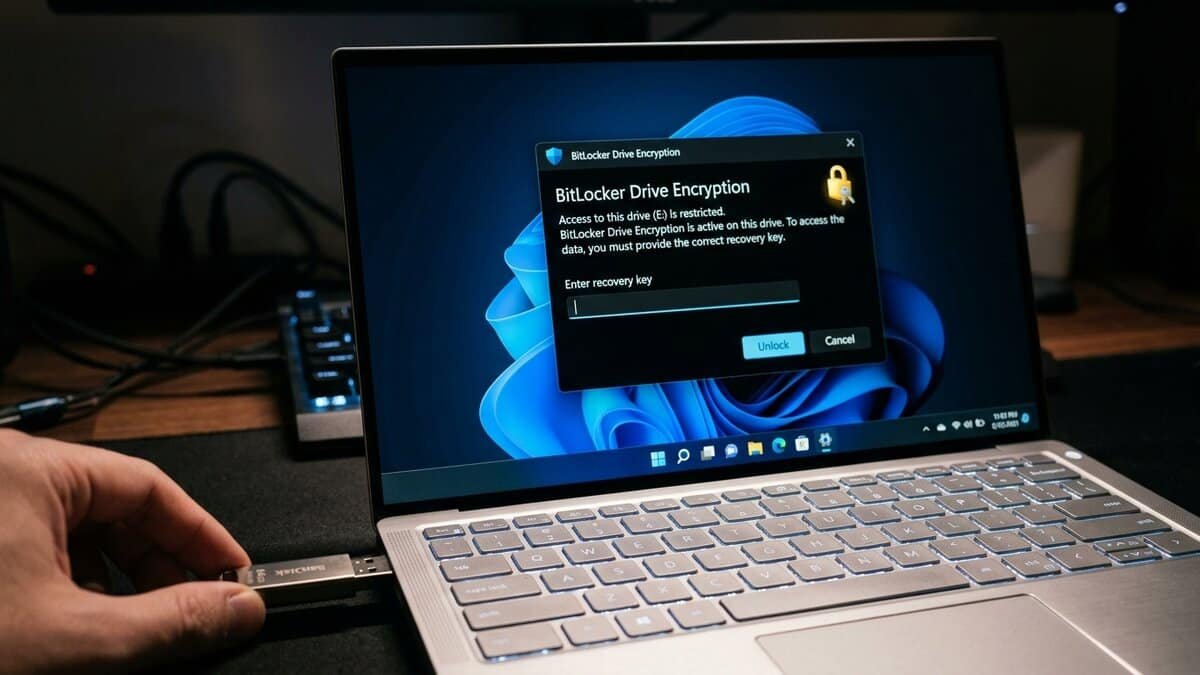
Why does this physical vulnerability matter for your fleet?
If you rely on BitLocker to protect company data on laptops, you need to understand that software encryption is only as strong as the physical path to the key. Recent demonstrations show that an attacker with physical access can intercept the BitLocker recovery key in less than a minute. This isn't a complex software exploit; it is a hardware sniffing attack that targets the communication between the CPU and the Trusted Platform Module (TPM).
For any startup or scale-up with remote employees, this changes the risk profile of a lost or stolen laptop. You can no longer assume that a powered-down device is a data vault. If the device uses a discrete TPM, the key travels across a bus that can be tapped with hardware costing less than fifty dollars. This bypasses the Windows login screen and gives full access to the drive's contents.
How is the encryption key actually stolen?
The flaw lies in the LPC (Low Pin Count) or SPI bus. When a Windows 11 machine boots, the CPU asks the TPM for the encryption key to unlock the drive. In many laptop architectures, this key is sent in plain text across the motherboard traces.
- Attackers connect a logic analyzer or a cheap micro-controller to the motherboard pins.
- They capture the data packets during the boot sequence.
- Specific tools parse this traffic to extract the 128-bit or 256-bit
AESkey. - The drive is then pulled and decrypted on a separate machine.
This process requires no specialized coding knowledge. It relies on the fact that while the data on the disk is encrypted, the 'handshake' between the hardware components often is not. If your hardware lacks Parameter Encryption, the bus is effectively talking out loud for anyone listening.
What can you do to secure your production devices?
You cannot patch physical hardware traces with a simple Windows Update. However, you can change how BitLocker authenticates to ensure the key isn't released just because the power button was pressed. Moving beyond 'TPM-only' mode is the most effective defense for high-risk hardware.
- Enable Enhanced PINs: Require a pre-boot PIN. This prevents the TPM from releasing the key to the bus until the user provides a secondary secret.
- Use fTPM: Firmware-based TPMs integrated directly into the CPU (like those from AMD or Intel) do not send keys across external motherboard traces, making sniffing much harder.
- Network Unlock: For office-based workstations, use
Network Unlockso the key is only provided when the device is on a trusted wired network. - Audit your hardware: Check if your laptop vendors utilize
Total Memory Encryptionor encrypted communication paths between the chipset and the TPM.
Standardizing on a pre-boot PIN is the most practical move for most teams. It adds three seconds to the user's morning but stops automated sniffing tools cold. Start by auditing your mobile workforce devices to see which models use discrete TPM chips, as these are the primary targets for this specific bypass. If you see an LPC bus on the spec sheet, that device needs a PIN.
UGC Videos with AI Avatars — Realistic avatars for marketing